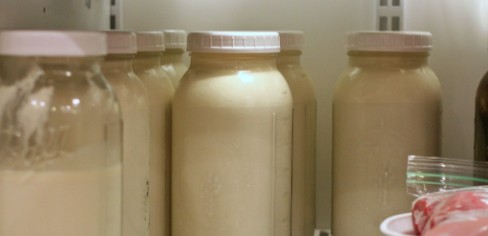
Most people have heard of raw milk on social media or from others around them. They hear about the amazing health benefits that pasteurized milk just doesn’t have: curing lactose intolerance, higher nutritional value, and immune protection. But it all just sounds too good to be true. How could such a hidden superfood exist? Well, the truth is, it doesn’t.
Pasteurization seems like such a scientific, unnatural word. In reality, all it is is cooking milk. Pasteurization is just a quick, fifteen-second blast of heat to kill disease-causing organisms. But why is raw milk so much better than pasteurized milk? It isn’t; raw milk is just uncooked: it’s literally raw, not in a figurative, straight-from-nature way. Sure, certain animal products don’t need to be cooked; sushi, sashimi, and tartare, for example. But, there are risks even with those, and extreme precautions must be taken to minimize them. Even if raw milk were in that category, there is practically no difference in taste or nutritional value after pasteurization; raw milk is not a specialty dish, but a health hazard, along the lines of uncooked chicken, ground meat, or turkey.
After mulling over it for a while, one must wonder how raw milk would cure lactose intolerance. The natural state of an adult cow (along with adult humans) is lactose intolerant, so how would a cow that can’t digest lactose herself give her calf the enzymes to digest lactose? In the other camp, it is claimed that lactose is changed after pasteurization, so it is digestible before. In fact, though, lactose is a sugar that won’t change during pasteurization. As water takes a while to boil, lactose does, and any temperature that could possibly change the structure of lactose during pasteurization is maintained for a short two seconds.
Okay, but if you’re lactose-tolerant, there are still benefits to raw milk, right? The nutrition surely must be better if there are such loyal followers of the thing. In actuality, there are very minute differences, but none are in any way significant, especially not significant enough to justify the risks.
What risks? Well, raw milk has a very high chance of being contaminated by pathogens (organisms that cause disease). The risk of getting sick from these pathogens is exponentially increased in immunocompromised people. Not just people susceptible to disease for medical reasons, but even children and the elderly. With all the misinformation floating around, what would be an effective way to inform the public?
If you are reading this, you’re one of the small minority of people who willingly read about science. Since most people don’t want to read something this long, simply spreading the word wouldn’t be very effective. But what if, when people went to purchase a raw milk product, there was a mandatory warning label? A summary of the risks, maybe with a longer explanation on the back of the product. Just throwing something out there: “This unpasteurized product has been recognized as high risk for disease, and has no known benefit over pasteurized products.” It wouldn’t limit people’s freedom to buy products, but it would be an effective warning for people who don’t have time for research and may have just seen misinformation online.
If raw milk is so dangerous, why not ban it? Well, it is banned in many states, except for non-human consumption, and people still buy it. Independent farmers continue to sell under bans and restrictions. Currently, it is illegal to cross state lines with raw milk, but people do it anyway. Even if something is illegal, the most dedicated believers will go far to acquire it. For example, prohibition: people continued to drink alcohol, though in more illegal and dangerous ways than before. In such cases, heavy regulation is more efficient to enforce than an outright ban.
In all, misinformation about pasteurization is widespread in our current day and age, and misinformation given in short bursts, often through social media, is difficult to combat. To fight such, equally short but effective methods must be used, but at the time of purchase. Raw milk may have no benefits, and may harm the consumer, but limiting the public’s personal freedom for the sake of its health has been proven to backfire.
Jillian Parad, Staff Writer
Jillian Parad is a sophomore at Ledyard High School. She likes music, cats, and video games.

