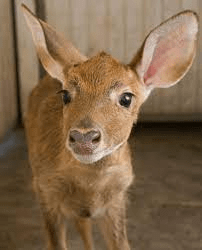
The somewhat viral “zombie disease” in deer has been quietly making its way through the world, avoiding the eyes of the public for a while. Therefore, not many people know what the disease is or that it exists. This so-called “zombie deer disease” is a form of chronic wasting disease, caused by a rare pathogen called prions. This pathogen causes the brain and nervous system of its host to change, turning the brain into a sponge-like consistency, and leaving the host in a zombie-like state. Prion diseases are fatal, with no treatment or prevention. The changes in the brain cause a lot of behavior and coordination issues.
In Wyoming, during the spooky month of October, a mule deer, indigenous to western North America, often grouped into black-tailed deer, died of chronic wasting disease (CWD). While it passed away in an area that is not typically inhabited by humans, it did pass near Yellowstone National Park in Wyoming. Dr. Thomas Roffe, DVM and former chief of animal health for the US Fish & Wildlife Service, has been predicting that CWD would appear in Yellowstone for years, decades even. He warned both state and federal governments that extreme measures had to be taken to slow the spread. The pathogen that causes CWD is difficult to eradicate and can persist in an environment for years. It is resistant to formaldehyde, radiation, incineration at 1,100℉, and disinfectants (The Guardian).
As of February 1, 2024, the disease officially appeared in British Columbia. It was confirmed to be found in a mule deer and a white-tailed deer in late January. The disease has started to grab the attention of the US and Canada for two reasons. The first reason is that it affects “big-game animals” (The Guardian), but the second reason is the possibility of the disease jumping the species barrier, meaning that this specific disease has the possibility of spreading to humans, first spreading to one of our food species. However, at this time, experts are unable to agree on whether or not the disease can spread directly from wildlife to humans, as there have been no cases in humans from this current outbreak. The CDC, though, does warn that there may be a risk to humans.
During the week of February 12, officials in British Columbia ordered that any deer, moose, elk, and caribou that are road-killed have to be tested for the disease, and “placed restrictions on the movement and disposal of deer” (The Guardian). Officials are making lots of efforts to halt the potentially rapid spread.
The long incubation period (the time it takes for the infection to develop) contributes to the stealth of the disease. With over a year of development, clinical signs take their time appearing. This leads to a longer latent period, where the disease is unknown. At the end of the incubation period, the disease becomes communicable, and at times, the clinical signs do not show up when the period of communicability starts. The only test is a brain or lymph node tissue test, which can only be done after death.
If a deer appears sick, exhibiting symptoms such as incoordination, excessive drooling, and overall zombie-like stares and actions, avoid hunting it or eating meat from it. Overall, the eyes, brain, tongue, spinal cord, spleen, tonsils, and/or lymph nodes from any deer, in general, should not be eaten. If hunting in an area that has been confirmed for CWD, submit the harvest for CWD testing before consuming it (NCWildlife).
When processing hunted deer at home, wear personal protective equipment (such as gloves) and avoid, or at least minimize, any contact with the brain, spinal cord, spleen, and lymph nodes (NCWildlife). Thoroughly disinfect the knife that is used to cut the head off. The most important thing to remember is that CWD and the prions that cause it cannot be cooked out of the meat. In order to eradicate the prion, the meat has to be completely incinerated and destroyed at extremely high temperatures.
While there does not seem to be any CWD near Connecticut, it is always best to take precautions when hunting or coming in contact with cervids.
Theo Picard, Staff Writer
Senior Theo Picard is a staff writer for the 2023-2024 Colonel Newsmagazine. He enjoys reading, hanging out with animals, and all things horror.
 COLONEL NEWS